How Camden Market started: 16 stalls in 1974
It began with 16 traders in a former builders' yard by Camden Lock, and grew into a sprawl of markets that stretches towards Chalk Farm.
By Only Camden Editorial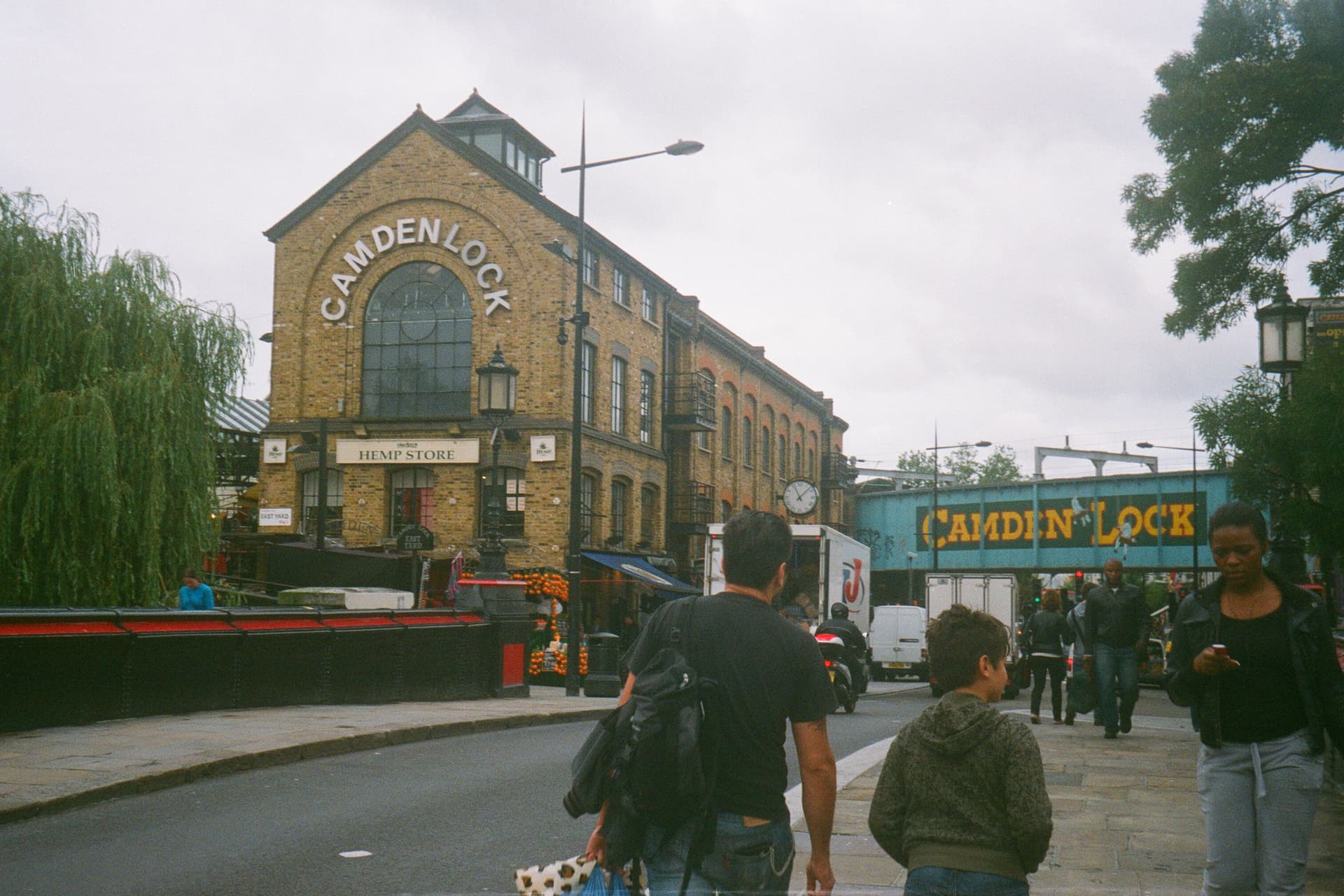
The short version: Camden Market began on 30 March 1974, when a new Saturday market opened by Camden Lock with 16 traders, according to Camden Market itself. They sold antiques, jewellery and arts and crafts. It is now open daily, and the best way to understand it is to start at the lock and walk outwards.
A builders' yard, 16 stalls, no history of markets
Camden Market's 50th-anniversary guide is blunt on one point: the area had never been used as a market place before. The first version was small. Camden Market's own journal describes Camden Lock as one of London's first crafts and antiques markets, launched as a “ramshackle array of stalls” in the old T. E. Dingwall builders' yard.
Wikipedia agrees on the date and describes the start as a small weekly crafts market that grew into a large complex of markets. One wrinkle: Wikipedia says the weekly market ran on Sundays, while Camden Market says Saturday. Either way, it was a weekend affair, and it was tiny.
The same timeline in the anniversary guide puts three dates in a row: the Regent’s Canal opened in 1820, Dingwalls opened in 1973, and Camden Lock Market followed in 1974. Dingwalls, by the lock, became a favourite hangout for musicians, and the guide names Charlie Watts among them. A market and a music venue arriving within a year of each other goes a long way to explaining why Camden Town still sells itself on both.
The gin and the horses behind it
The stalls arrived on ground with a working past. Camden Market says the stretch from Camden Lock to the Roundhouse was, in the 19th century, an industrial site of distilleries and warehouses, mainly gin. Londonist adds that a train loaded with gin left Camden each day.
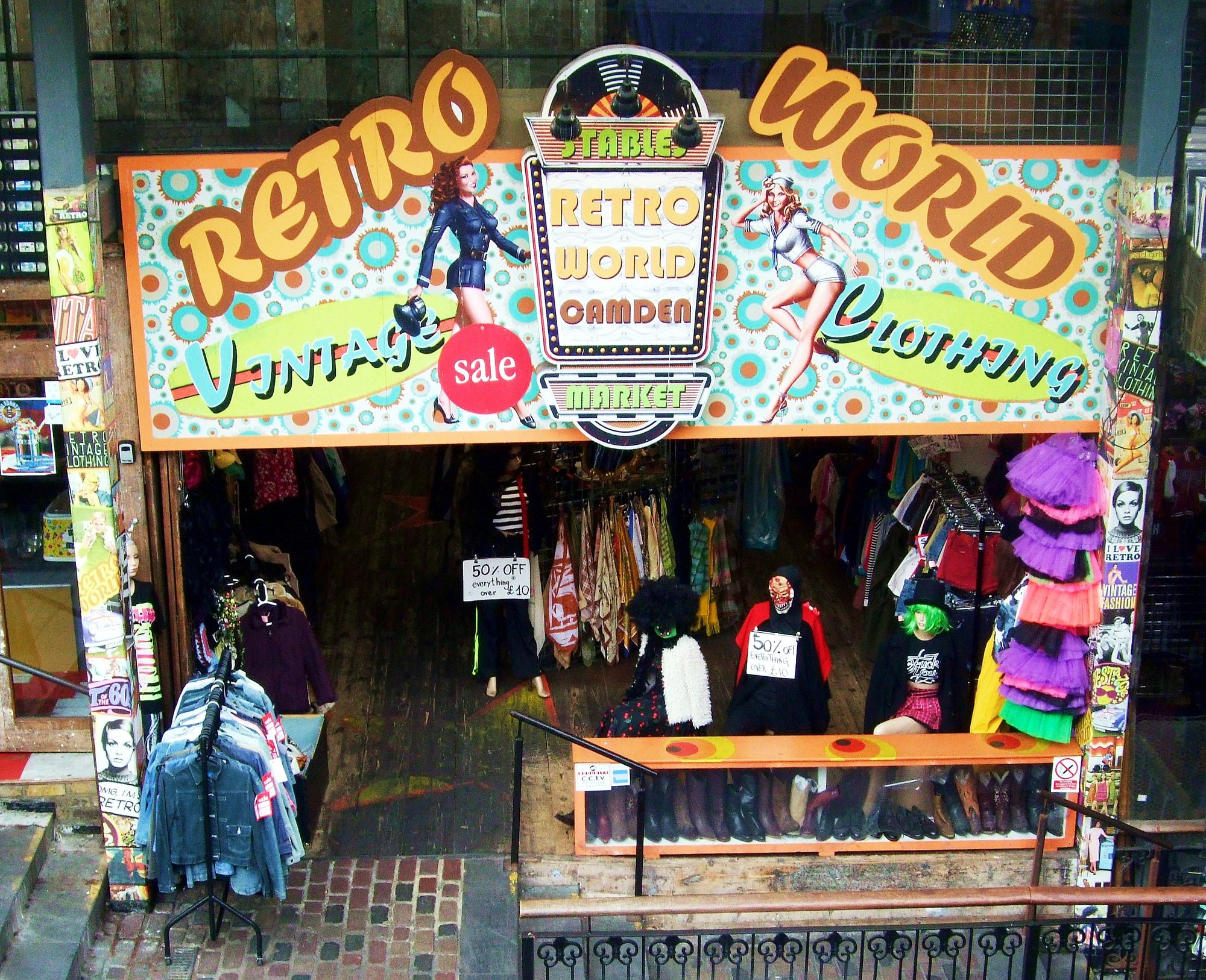
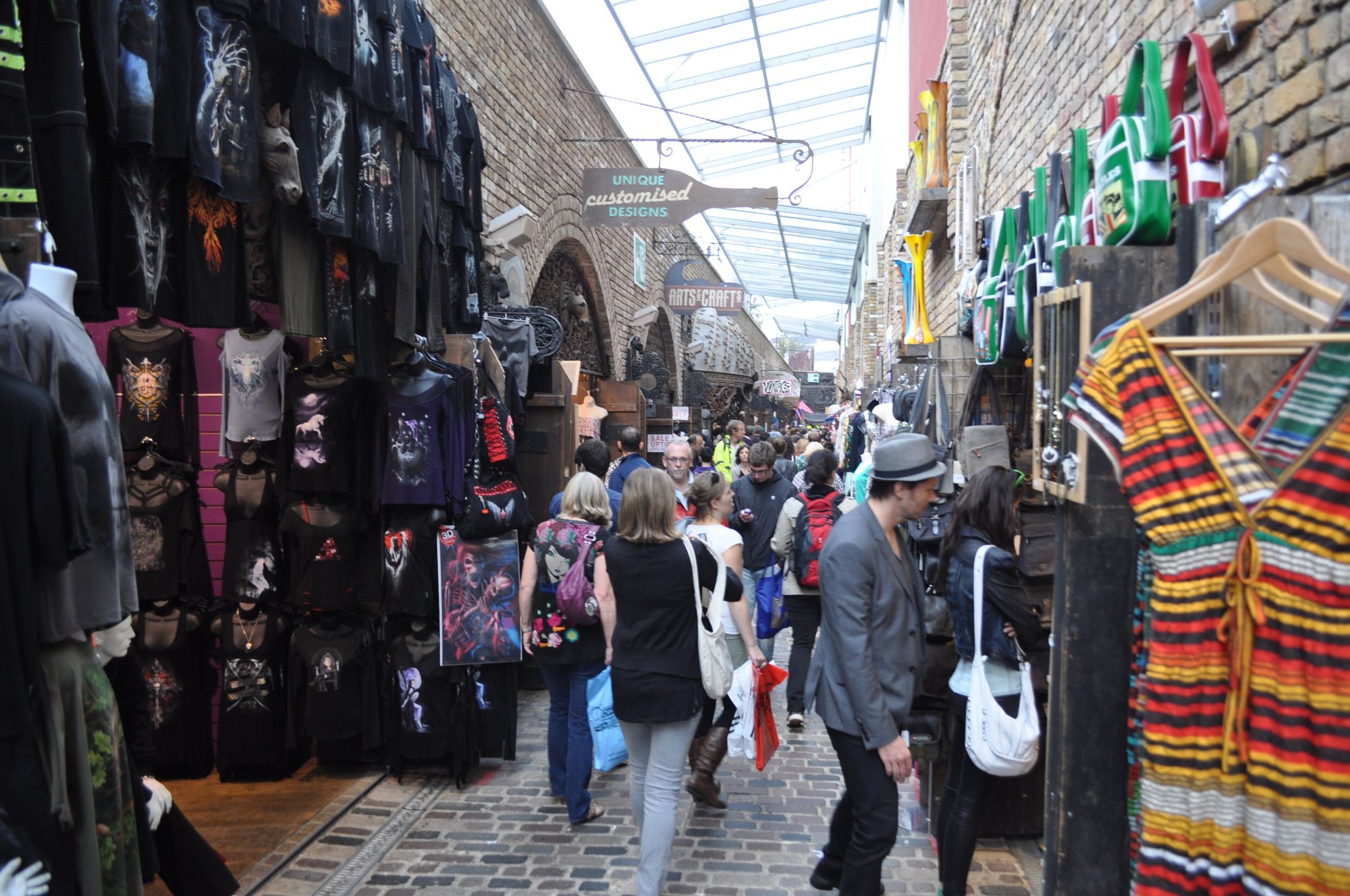
Camden was also the end of the railway line from the north, a place where goods moved between rail, road and canal. That is the reason for the horses. The Stables Market sits in the former Pickfords stables and a Grade II listed horse hospital, and sources disagree on exact numbers, but it is safe to say hundreds of horses worked here. The cobbles, the ramps and the low brick tunnels you walk through today are a leftover of that freight business, not a theme park.
From one yard to a sprawl
Wikipedia says the Lock’s goods have widened over the years to books, clothing and jewellery, but it remains the principal Camden market for crafts. From 2006, a large indoor market hall was built in a yard between Camden Lock Market and the Stables Market, on ground that had held open-air stalls.
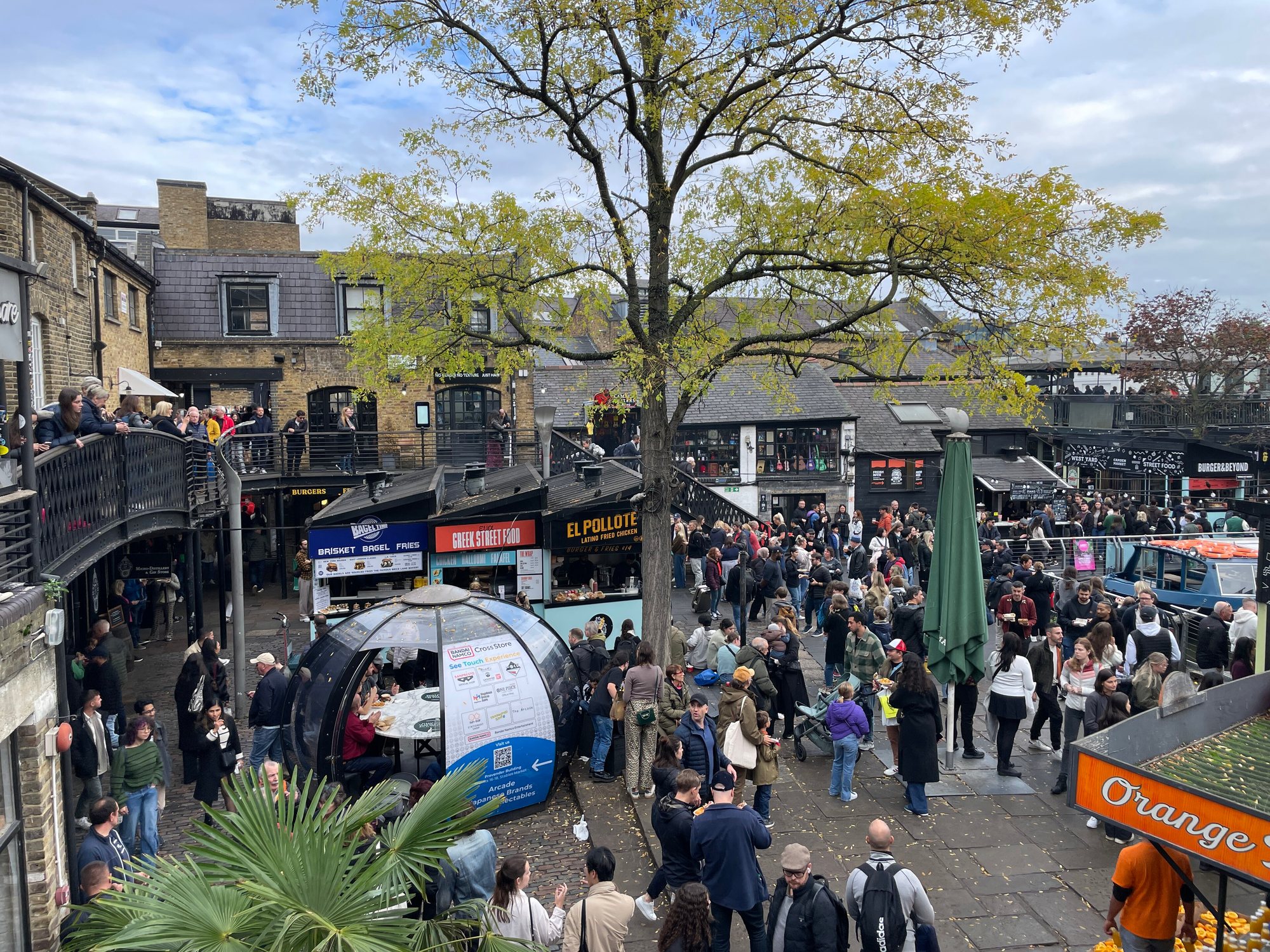
Camden Market now describes itself as three quarters: the Stables, the Lock and Hawley Wharf. The anniversary guide records Camden Lock Village reopening as Camden Market Hawley Wharf, and mentions a mural by David Shillinglaw inspired by five decades of the market.
So how many markets are there?
This is where the arguments start. Wikipedia counts six distinct Camden markets. Londonist, in an older piece, says “Camden Market” is a misleading name and lists Camden Lock, the Stables, the Canal Market, Buck Street, Inverness Street and the market inside the Electric Ballroom.
Our count, for a walk rather than a ledger, is four: the Lock, the Stables, Hawley Wharf and Buck Street. Buck Street is a run of stacked shipping containers on Camden High Street, and it sits outside the Camden Market company’s three quarters. Inverness Street and the Electric Ballroom are worth a detour too, but they are separate again.
Seeing it today
- Where: Camden Lock Place, NW1 8AF. Camden Town is the nearest tube.
- When: open daily, with the FAQ page saying it closes only on Christmas Day. Most traders open at 10:00 and close around 18:00, and North Yard restaurants open evenings. Individual traders set their own hours, so check before a long trip for one stall.
- Best route: start at the lock, where it began, then head to the Stables and the old horse hospital before you reach the newer sections.
More detail on the early years is in Camden Market’s own journal, and the fuller timeline is in the Wikipedia entry. Hours are on the Camden Market visit page.