Hampstead Road Lock: the twin lock at Camden Town
Hampstead Road Lock is the only twin lock in London, worked by boaters themselves, with Grade II listed chambers and a roving bridge beside it.
By Only Camden Editorial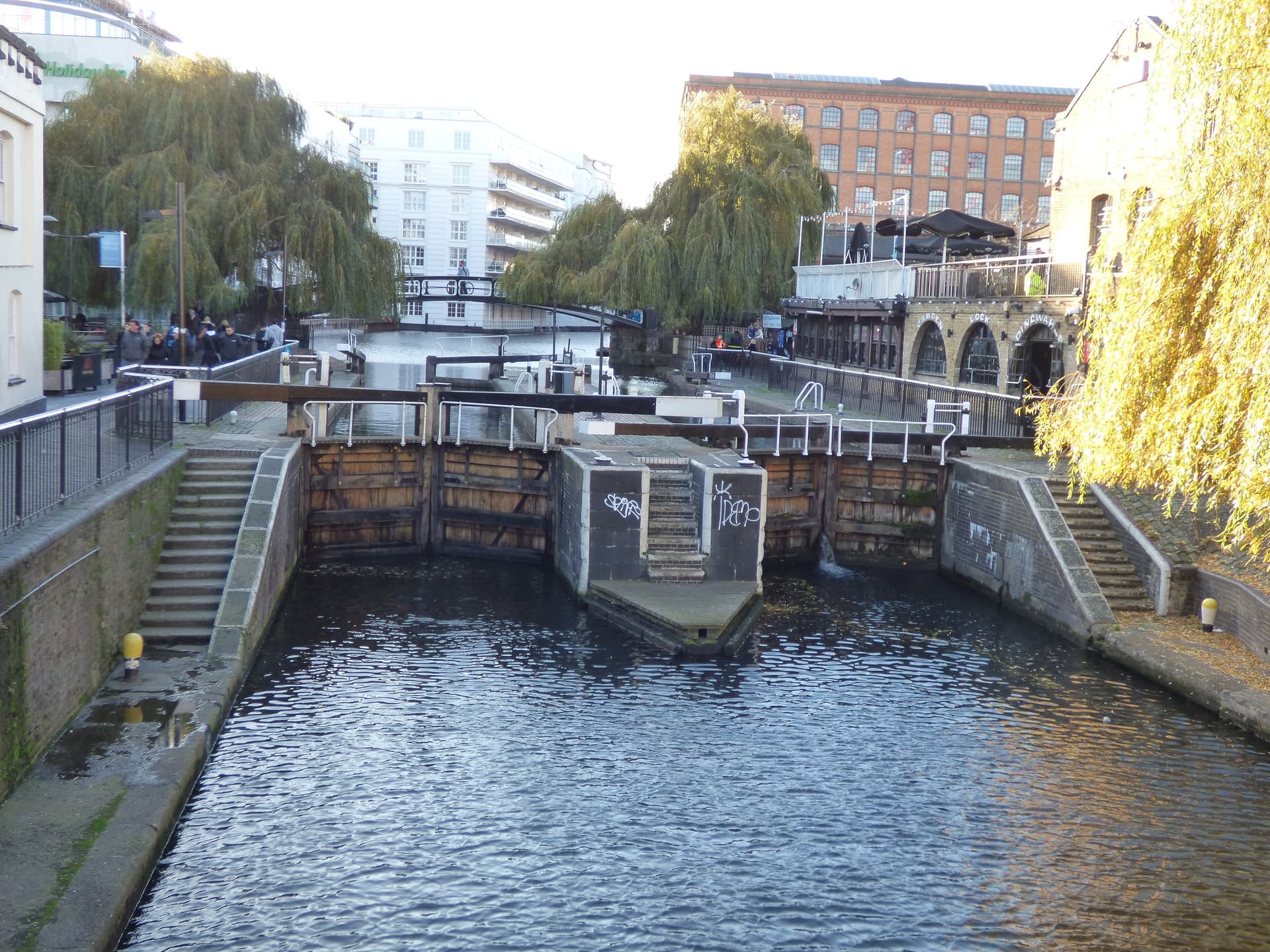
Short version: the lock everyone calls Camden Lock is officially Hampstead Road Lock 1, a twin lock on the Regent's Canal in NW1. Both chambers carry that name on a sign. It is manually operated, so boaters work it themselves and there is no lock-keeper. Watching it costs nothing and the towpath is open to walk past.
What you are looking at
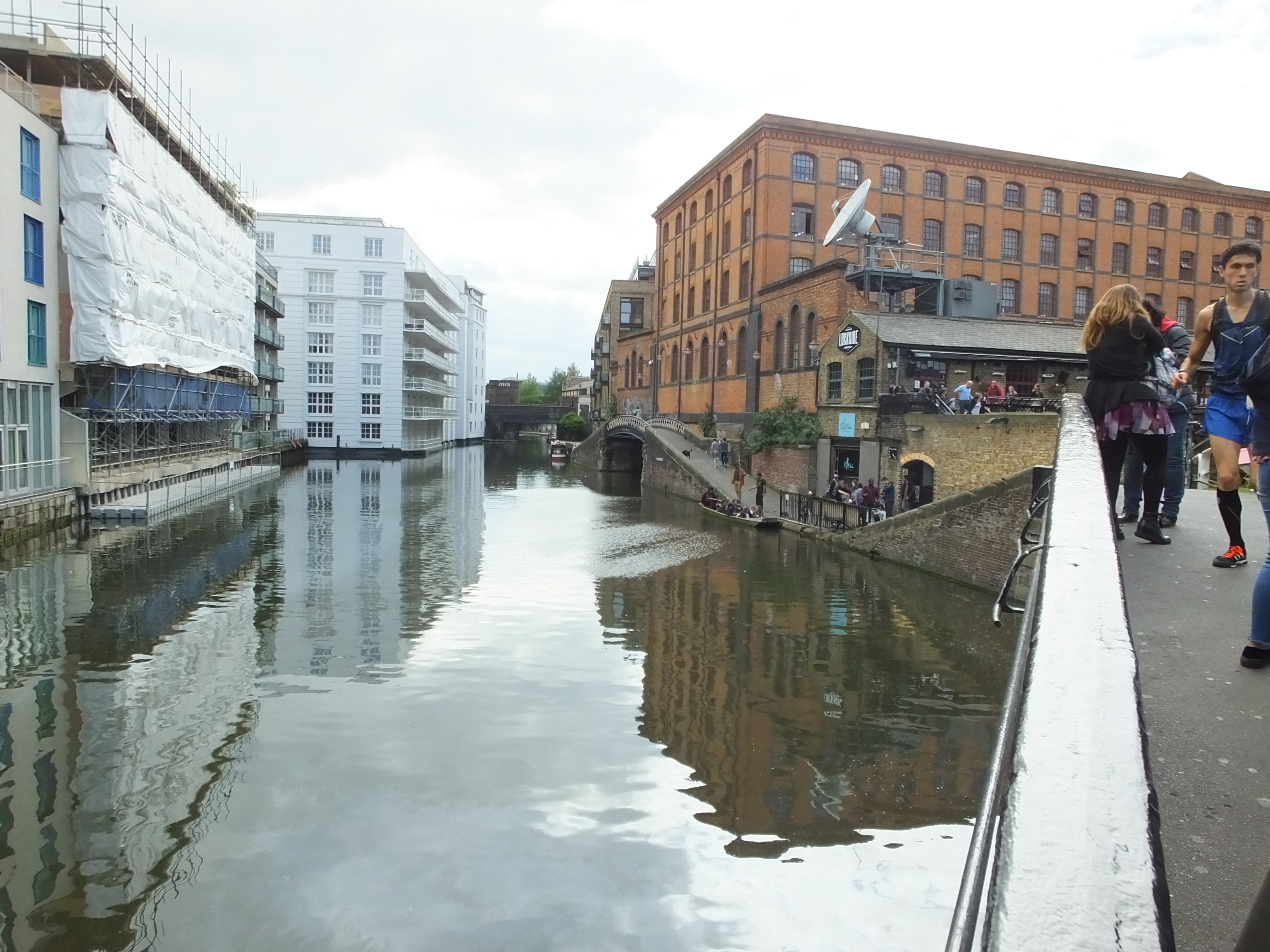
Two side by side brick chambers with stone coping along the top. Geograph's caption calls it the only remaining twin lock on the canal, because the others were modified to single-lock operation. Wikipedia says Hampstead Road is the only lock where both chambers have been kept, and that they are now emptied conventionally. Canal & River Trust (CRT) calls it the only twin lock in London, with Camden Market on one side and weeping willows over the roving bridge.
CRT's filming page calls it “probably London's most popular canal location” and lists S.P.E.C.T.R.E, The Interceptor and 24 among its film appearances. The access postcode is NW1 0JH.
Is it actually called Camden Lock?
Not quite. Wikipedia says Camden Lock is properly the former wharf and stables area just north of the locks. CRT puts it more bluntly: there isn't actually a Camden Lock. To CRT, Camden Lock is the market, with three locks nearby: Hampstead Road, Hawley and Kentish Town. Hawley and Kentish Town are a short way to the east. Hawley was once a double lock like Hampstead Road. To the west of Hampstead Road there is a long level stretch of canal.
How boats pass through
This is a manual lock. Boaters operate it themselves. The detail of the gate and paddle routine is best taken from CRT's own boater guidance, so if you plan to take your own boat through, read that first. If you only want to watch, stand on the towpath, keep clear of the edge and let the crew work.
For scale, the Canal Museum says the whole canal drops 86 feet (26 m) through 12 locks, followed by a ship lock. It runs just over 8½ miles (13.5 km) from Paddington to the Thames at Limehouse.
The roving bridge and the horses
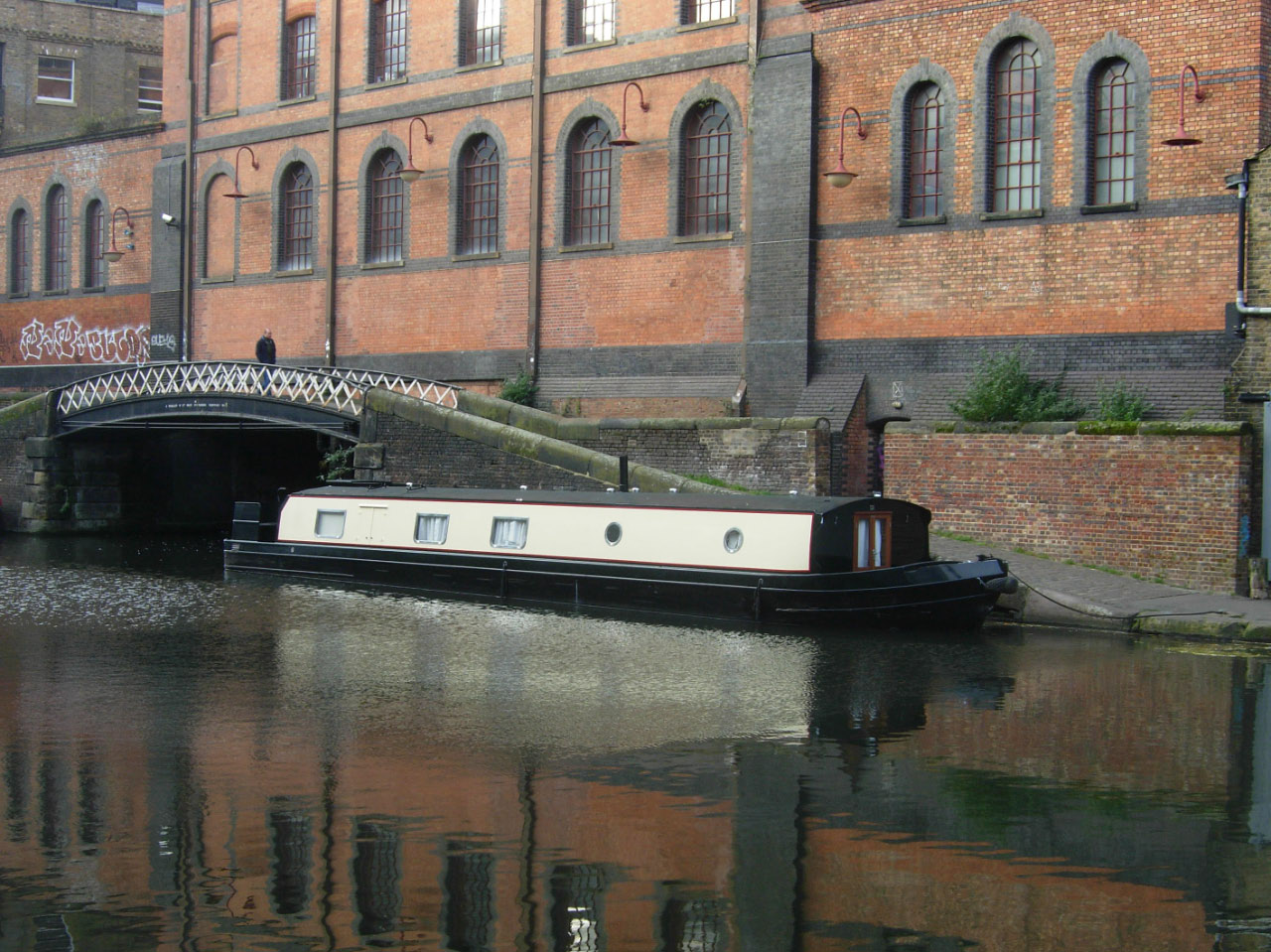
Next to the lock is a cast-iron roving (changeover) bridge, Grade II listed. Historic England describes a single-span skew cross-over bridge. It originally had wrought-iron tension stays, now restored with steel tension cables, and the decking has been renewed. It carries the towpath back to the northern side of the canal.
Look at the approach ramps. They have granite setts and stone parapets scarred with rope marks, made by the tow ropes of barges drawn out of the lock and under the bridge. Historic England says that going downhill, horses could rejoin the towpath by crossing Hampstead Road Bridge, entering by the ramp west of the bridge, opposite the lock-keeper's cottage. The cottage is now the Regent's Canal Information Centre.
Wikipedia says the Regent's Canal Company decided in mid-1846, after the roving bridge was completed, to provide horses for towing, with stabling at the locks for up to 18 horses. CRT says the area was once full of warehouses, gin distilleries and around 800 working horses.
A short history
- 1812: the Regent's Canal Act received approval on 13 July, authorising a canal from Paddington to Limehouse.
- 1816: the Paddington to Camden section opened, according to the Canal Museum.
- 1818 to 1820: the locks were built. They are Grade II listed.
- 1 August 1820: Wikipedia's Kentish Town Lock article says the whole canal fully opened at 11 a.m.
The Canal Museum also says an innovative hydropneumatic lock, invented by William Congreve, was first built at Hampstead Road Lock.
Historic England lists it as “Hampstead Road Lock on the Grand Union Canal”, list entry 1272427, Grade II. That is the old name. This is the Regent's Canal, part of the Grand Union network.
See it from the water
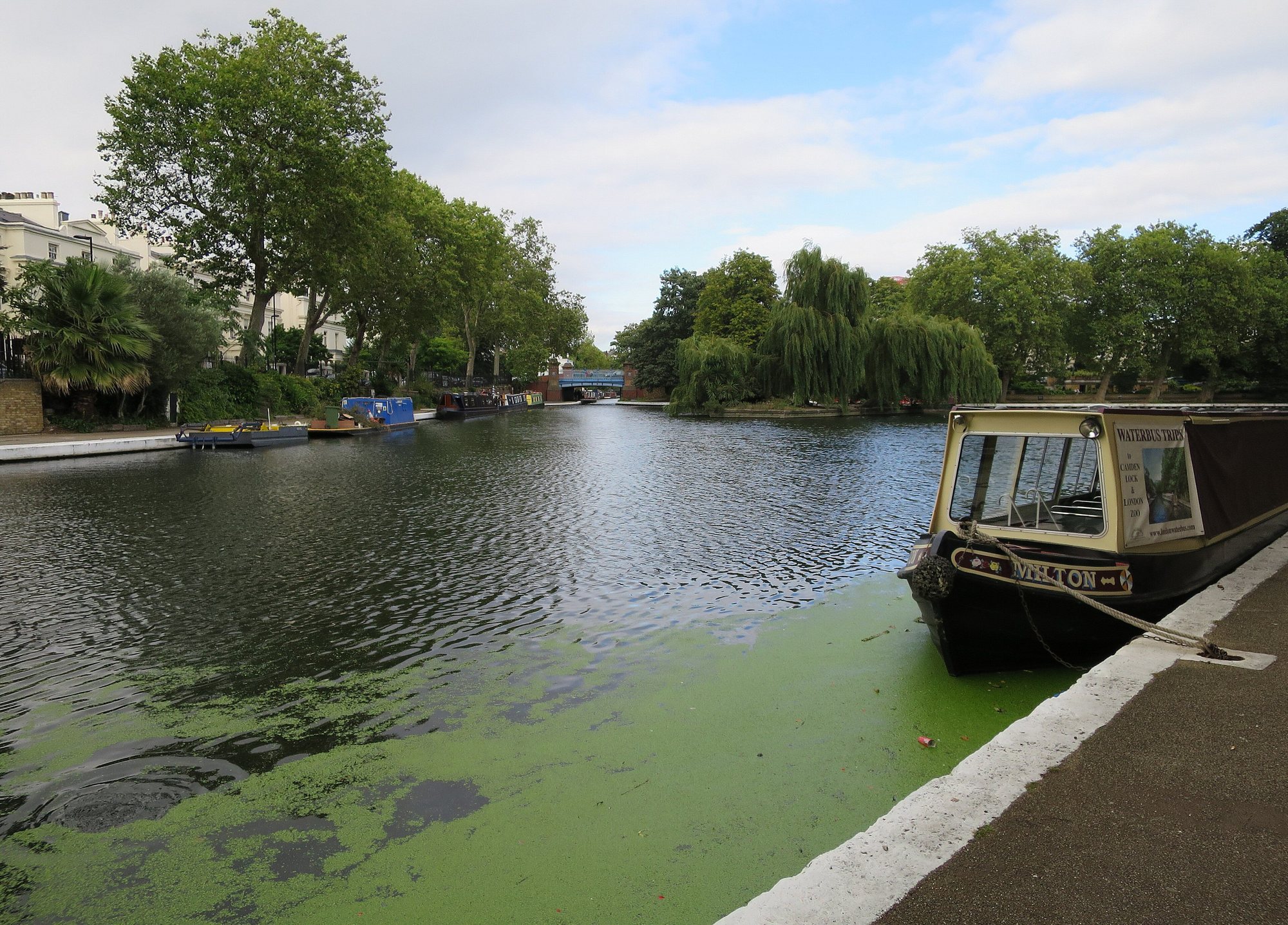
Camden Market's journal says the London Waterbus is moored in the market's West Yard. Trips run between Camden and Little Venice and take 45 minutes one way, in either direction, and you can book online. The operator says there are no refunds for missed trips, so turn up early.
Camden Market describes two boat types. The Classic Historic Narrowboat has live English commentary. The Comfort Cruiser has music and no commentary. If you want the history explained, take the narrowboat.
Or walk it
The towpath runs west to Paddington and Little Venice, or east to King's Cross, Mile End and Limehouse Basin. Walks.com and others cover the route, and one guide describes a 4.5-mile Little Venice to King's Cross walk that passes Camden Market.
Sources for this piece include Wikipedia, Historic England, CRT and the London Waterbus site.